
Course Description
Users and custodians of historic books are increasingly interested in evidence of former ownership, which helps to elucidate how they were used, read, regarded, and circulated. It is also increasingly important in verifying legitimacy in owning and selling books. Provenance research includes recognizing and deciphering various forms of ownership markings, tracing owners and their books, and understanding the value of this information. The course will focus on all these areas, and aims to give participants an improved personal toolkit for interpreting the different kinds of provenance evidence they are likely to encounter. Topics covered will include inscriptions, paleography, bookplates, heraldry, bindings as provenance evidence, sale catalogs, tracing owners, and the recording of provenance data in catalogs. The primary focus will be on pre-twentieth century printed books.
The course should be of interest to anyone who regularly works with early books—librarians, collectors, dealers—and who would like to improve their knowledge in this area. It will be assumed that students have at least a grounding in historical bibliography and some familiarity (through direct handling experience) with early printed books.
Faculty
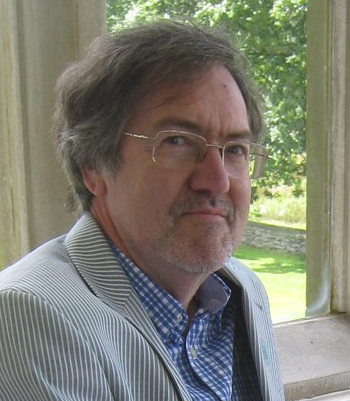
David Pearson
David Pearson retired in 2017 as Director of Culture, Heritage and Libraries for the City of London Corporation, after a professional career of 35 years or so working in various …
Advance Reading List
Admitted students are encouraged to review at least some of the following books in advance of the course; however, a thorough study of every title listed here is not a prerequisite for course participation. Detailed bibliographies will be distributed during the course, dealing with the various areas covered, and extensive preliminary reading is not necessary.
It will be assumed that students familiar with the essentials of historical bibliography and with handling early printed books (otherwise, please see. Philip Gaskell’s A New Introduction to Bibliography).
It will be useful to look at David Pearson’s handbook, on which the course is based, as an introduction to the main topics covered:
- Pearson, David. Provenance Research in Book History: A Handbook. Oxford and New Castle: Bodleian Library/Oak Knoll Press, 2019.
Beyond that, the following references are relevant to different aspects of the course and looking over them will give good background, in advance of attending:
- Acheson, Katherine, ed. Early Modern English Marginalia. New York and London: Routledge, 2019.
- Dane, Joseph A. What is a Book? Notre Dame, IN: Notre Dame University Press, 2012.
- Lee, Brian North. British Bookplates: A Pictorial History. Newton Abbot: David and Charles, 1979.
- Orgel, Stephen. The Reader in the Book. Oxford: Oxford University Press, 2015.
- Sherman, William H. Used Books. Philadelphia: University of Pennsylvania Press, 2008.
- Stoddard, Roger. “Looking at Marks in Books.” Gazette of the Grolier Club 51 (2000): 27–47
If anyone would like to undertake more background reading in advance of the course, have a look at chapter 10 of Pearson’s Provenance Research Handbook (works on provenance, book collecting, and private library history).
Course Evaluations
Course History
-
2021
David Pearson teaches this course online (22 hours).
-
2010–
David Pearson teaches this course in person.
-
1986–1987
Nicolas Barker and Robin Halwas teach a precursor course, “Evidence of Ownership: Tools and Techniques for Investigating the History of an Early Printed Book.”